Generation Z and Millenials are today the most desirable audience and also the most demanded audience for any brand. They grew up in a world full of screens notfications and endless content. As a natural consequence is that their attention is limited their trust is hard to earn and their relationship with traditional advertising is more selective than ever. In this environment, Out Of Home doesn’t try to compete with digital advertsing. Instead it leverage what it makes it unique. It is where young audiences live move and interact.
And this isn’t just an estimation. The Location Intelligence Study (LIS) is the platform that measures audience exposure to out of home advertising based on mobility data and its results show that young people are the audience that OOH reaches more than any other age group.

The data: young people are the audience OOH reach most
Based on campaign measurements across different brands over a full year the audiences most reached by OOH campaigns are aged 18-34 followed by the 35-44 age group. The 18-34 group covers Generation Z(the adult members of GENZ) and younger Millenials. In other words the most dynamic audiences in advertising.
This data comes from LIS which turn the movement of the city into measurable media insights with metrics such as Total Reach, Unique Reach, Impressions, Frequency and Age Distribution. It combines data from three indepedent sources. Two mobility data providers(location data) covering vehicles and people one of which is Vodafone and a geospatial analysis platfmor. The age distribution of the audience is extracted from Vodafone’s anonymised mobile device data. This way we know not only how many people a campaign reaches and how often but also various demographic characteristics.
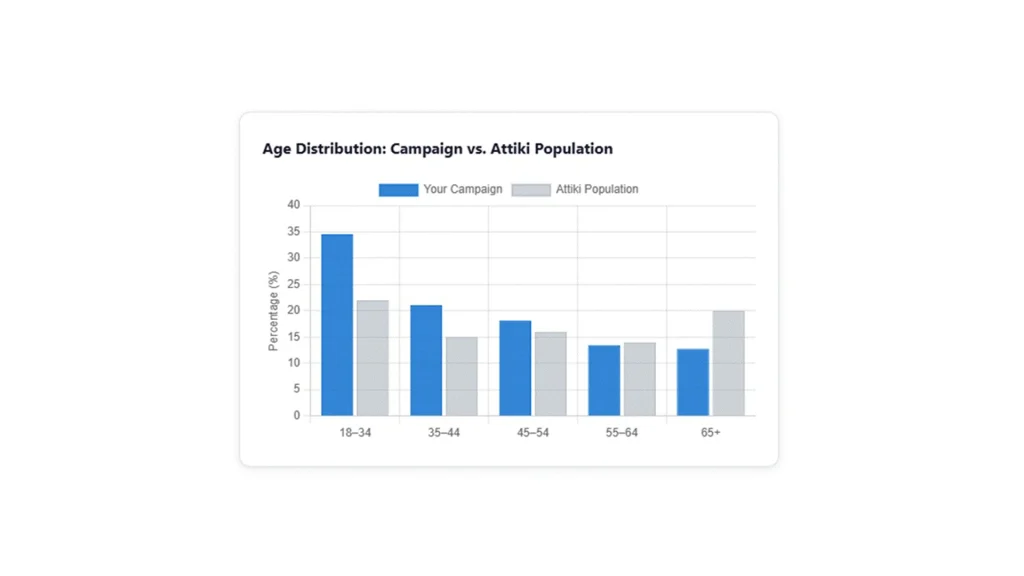
The chart below shows that 18-34 years old represent the 22% of the total population of Attica(grey bar), 35-44 years old represent the 15% etc. The data from a year of out of home campaigns show that OOH has greater reach among younger age groups.
We examined campaigns using LIS platform over a full year and the result was the same. 34.9% of the audience reached by the campaigns belonged to age group 18-34 while this group represents just 22% of the total population in Attica. Similarly 35-44 years old accounted for 21% of the campaigns audiences compared with 15% of the population.
In other words young and dynamic audiences are consistently overpresented in the OOH audience relative to their share of the population. That happens because they are the audiences who move around the city mostly whether commuting to work or heading to places of entertainment.
Why young people are where OOH is
The overrepresentation of young people in the audience of out of home advertising is logical. These are the age groups that mainly use public transport for their commute. Therefore, they are close to the locations of out of home advertising. They also spend more time outside the home. They are essentially the age groups that drive the local market (retail, food and beverage, etc.), and at these points of commercial interest is also where out of home advertising is located, which not only does not interrupt the experience they are living, but becomes part of it.
Although the daily life of young people is closely connected to their mobile phones and screens, their most important experiences continue to take place in the physical world. Commuting, university, workplaces, concerts, shopping centres, gyms, cafés and entertainment areas are meeting points and places of socialisation for young audiences.
Since the lifting of the pandemic restrictions, the experience economy has been flourishing worldwide. Concerts, theatre performances, theme parks and even restaurants and cafés have seen a significant increase in their turnover, due to the search for real-life experiences by the new generations. The saturation of social media led them to seek real experiences in the physical world. This is yet another reason why younger generations are constantly at the centre of city life, and therefore in front of the messages of out of home advertising.
Advertising is smoothly integrated into their journey, without skip buttons, ad blockers or pop-ups. The message appears at the right moment, in the right environment, offering high physical visibility and an authentic presence that immediately creates emotions.
Trust is built in public space
Reaching young people is the first step. The second is for them to trust you. Younger audiences are particularly familiar with excessive advertising on digital media. They easily recognise sponsored content and they often ignore it. OOH works in a different way, as the presence of a brand in public space creates the sense of a real, established business. It is not simply a message that appears on a screen, but a physical presence within the city. This sense strengthens credibility and contributes to building a positive image for the brand.
Creative ad that wins impressions
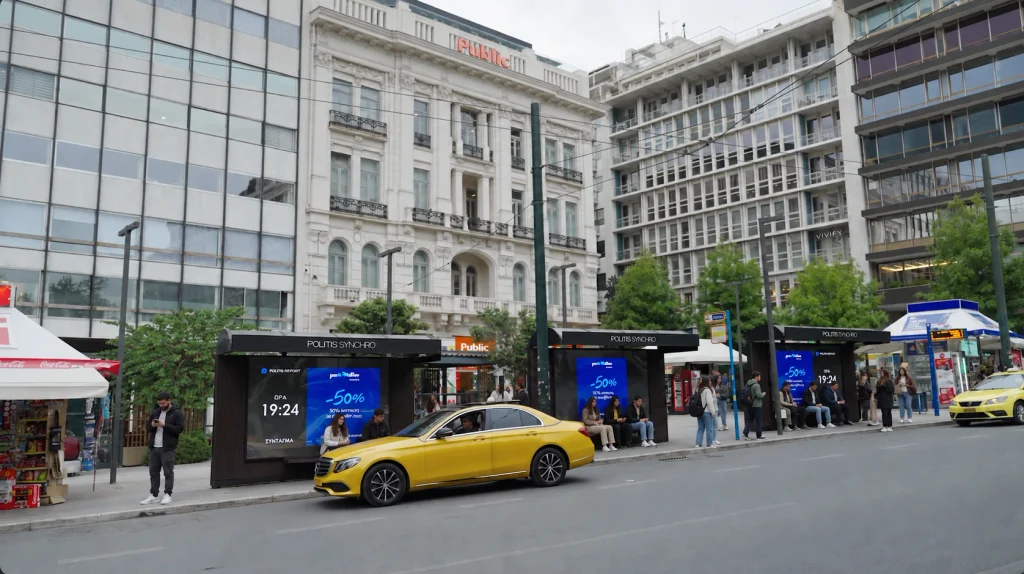
Young audiences don’t spend time on complicated advertising messages. OOH performs better when the creative idea is simple inventive and immediately understandable. A strong visual a clever line an image that evokes emotion or invites interaction can transform a brief exposure of just a few seconds into an experience that the consumer will remember afterwards. It is not a coincidence that many campaigns that go viral on social media start from an impressive OOH execution. According to research published by WARC 55% of Generation Z state that humorous and creative OOH ads positively influence their purchase intent while Gen Z is also the age group that notices Digital Out of Home screens the most.
From the street to social media
The relationship between OOH and young audiences doesn’tt stop in the physical space. On the contrary it often continues in the digital environment. An impressive billboard an original image on a digital screen or a creative installation at bus shelter are photographed shared and gain a second life through Instagram, TikTok and other digital platforms. In this way OOH doesn’t operate separately from digital advertising but becomes the starting point for organic content that can spread be discussed and bring additional exposure without media cost.
OOH remains relevant because it remains human
The new generation is not looking for more advertising it is looking for better experiences. Out of Home continues to prove that communication does not depend only on clicks but on whether a message appears in a way that fits into the everyday life of people. In an era where trust is the most valuable asset OOH maintains a unique advantage: being where people really live and move every day.
That is why it continues to be one of the most powerful means of communication for brands to connect with young audiences.