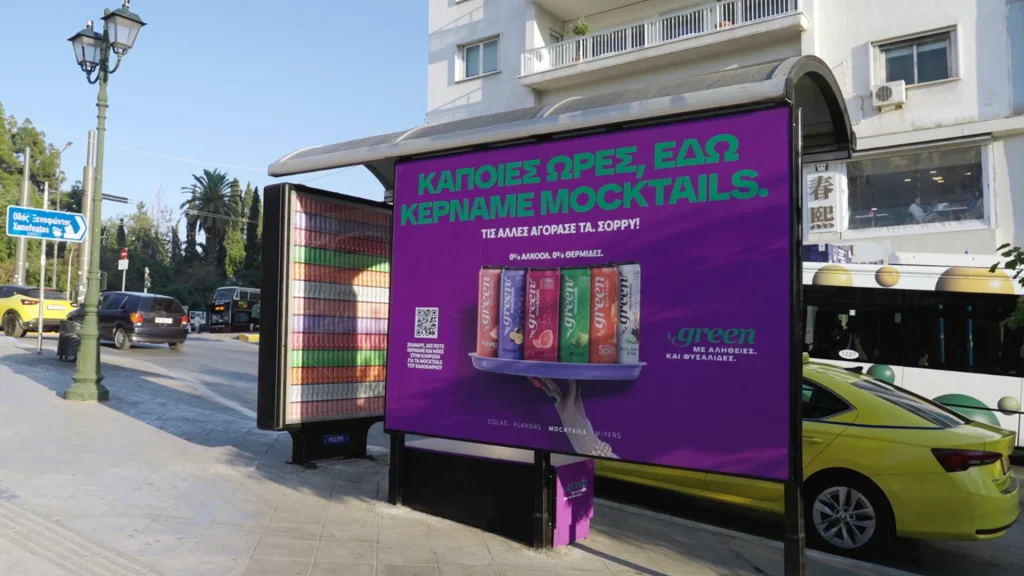
Outdoor advertising in Greece is an organized and regulated communications sector that operates within a specific legal and regulatory framework, involving public tenders, contracts, and defined obligations for operators.
The Regulatory Framework for Outdoor Advertising
Outdoor advertising is governed by specific regulations that determine where and under what conditions advertising media can be installed and operated.
- Specific rules apply to the installation and operation of advertising structures.
- Permitted locations and advertising conditions are defined by the applicable framework.
- Depending on the case, the required approvals, permits, or other administrative procedures may apply.
- The applicable requirements vary depending on the type of space, advertising medium, and responsible authority.
Unlike other markets where outdoor advertising may rely to a greater extent on private agreements, in Greece the sector is largely connected to public contracts and regulated procedures.
How Are Outdoor Advertising Spaces Allocated?
A significant part of OOH inventory in Greece is located in public spaces, municipal infrastructure, and transport infrastructure. Its commercial use may be allocated through tenders, contracts, or other regulated procedures, depending on the responsible authority and the type of space.
Public Tenders for Outdoor Advertising:
- The commercial use of specific advertising spaces, such as passenger waiting shelters, is awarded through open competitive tenders.
- These are not direct awards. Any interested company can participate and compete for the contract, provided it meets the applicable requirements.
- The successful bidder is selected based on the financial offer and the eligibility criteria defined by the tender.
- Tender documents define the terms and conditions for participation and use of the advertising spaces.
- Contracts specify, among other things, the duration, technical specifications, and obligations of the operator.
- The financial consideration and other obligations are determined by the terms of each tender and contract.
Why Do Public Tenders Matter for the OOH Market?
Public tenders are one of the main mechanisms through which the commercial use of specific public or transport-related spaces may be allocated.
- Participation and operating requirements are established in advance through the relevant tender procedure.
- Interested companies can participate according to the conditions set out in each tender.
- The operator is selected based on the criteria defined for each tender.
- The operation of a specific OOH network results from a formal tender and contractual process rather than a simple private agreement.
- The successful operator receives the right to use a specific space for a defined period, in accordance with the terms of the contract.
What Does an OOH Operator Undertake?
The operation of an OOH network may involve specific investment, technical, and operational obligations, depending on the terms of the contract.
- Installation or upgrading of advertising media and related infrastructure.
- Construction, maintenance, and technical support of equipment.
- Compliance with the technical, operational, and aesthetic specifications set out in the contract.
- Payment of the financial consideration stipulated for the relevant authority.
Is There a Monopoly in Outdoor Advertising?
Definition:
A monopoly primarily concerns the restriction of competition within a market. The exclusive operation of a specific network by one operator, when awarded through an open competitive tender and contractual process, does not in itself constitute a monopolistic practice.
In the case of outdoor advertising:
- A specific network may be awarded to one operator for a defined period.
- The award results from the relevant tender and contractual process.
- The existence of multiple networks, formats, and operators is part of the overall structure of the OOH market.
- The fact that one company operates more than one contract does not, in itself, constitute evidence of monopolistic practice.
What Benefits Does Outdoor Advertising Provide to Public Spaces?
Under concession models that include investment and reciprocal obligations, OOH can also contribute to the creation and improvement of urban infrastructure.
- Creation or upgrading of bus stops and passenger shelters.
- Maintenance and improvement of urban equipment.
- Investment in new and digital infrastructure.
- Payment of rent or other financial consideration to the relevant authority.
- Use of advertising media as public communication points for information and social awareness campaigns.
In this way, the commercial use of OOH can, under specific concession models, be combined with investment, infrastructure maintenance, and reciprocal benefits for public and urban spaces.
The placement of outdoor advertising in Greece is governed by Law 2946/2001 and its subsequent amendments and provisions. Working with established and regulated OOH operators, such as Politis OOH, supports compliance with the applicable regulatory framework and ensures that campaigns are implemented under safe and lawful conditions.